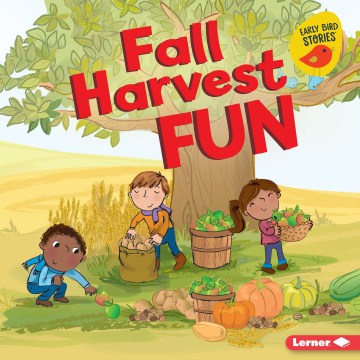
After a quick tour through the work of Spring (planting) and Summer (growing, weeding, bug eradication), this book moves into harvesting and all the fun around it. Different types of harvests are described. The book moves into harvest festivals from different cultures and then ends with a glossary, index and critical thinking questions.
Pictures are bright and the characters are diverse. This is a great book to introduce the younger set to this aspect of Autumn. It is part of a six book set that will give a fuller understanding of all aspects of the season. Highly recommended.
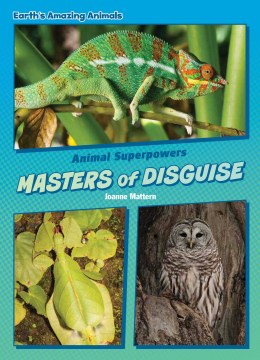
Six animals and their use of color, shape or markings to disguise themselves are described in this colorful slim volume from the Animal Superpowers series. The animals are from a variety of habitats, from ocean to desert and their natural abilities in camouflage are noted as occurring for a variety of important reasons. We learn that some animals are predators and use this ability to sneak up on their prey and others use it as a protection against their own predators.
Full color photos complement the text and bold words are defined in a glossary at the end of the book. Some cartoon-like illustrations break up the text and “Now you know!” boxes with additional cool facts are interspersed throughout.
This is a good introductory book to a variety of species and their use of camouflage. It might be lead to further investigation into this aspect of the animal kingdom.
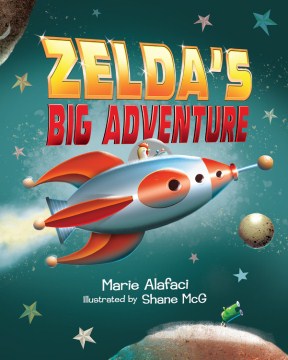
Zelda dreams of going into space and asks her barnyard friends for help. In a story reminiscent of “Little Red Hen”, her rather lazy friends decline her request and she does it alone. She works through the engineering plan, designs her spacesuit, runs through a series of experiments and ends up in space.
What a wonderful place! Zelda collects space rocks, counts planets and does all the work of an astronaut. It is hard work and she does it on her own. Upon her descent back to earth, her friends excitedly welcome her home. Then, the bragging starts – not Zelda, but her friends who brag that she asked for their help. Zelda, in typical hen fashion, looks past her friends’ poor behavior and decides that the next time, she might take her friends with her.
This fractured version of a much loved story is a nice addition to the mix. The illustrations are almost three dimensional in appearance and the characters are engaging. This book is also valuable for STEM teaching, as it pairs literature with some scientific cluck! Recommended.
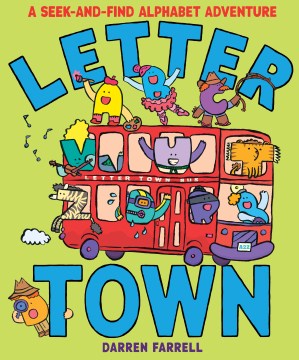
Letter B is a bus driver that takes us on a ride through Letter Town, where two page spreads are dedicated to all things related to a particular letter of the alphabet. The letters themselves are actively engaged – one G is golfing while another is grocery shopping. The illustrations are bright, lively and full of activity. The bus meanders through town, picking up and dropping off letters as it goes. The story ends with Letter B putting the bus away at the end of a long day. And, Deputy D is helping Robber R return all the items he stole.
The end papers are filled with the letters’ words that the reader must find for each one. Young students will enjoy reading and seeking in this wonderfully colorful Letter Town.
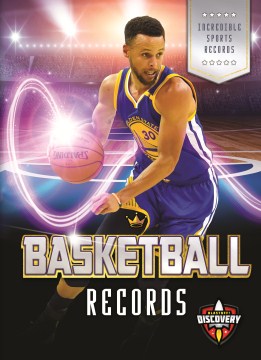
Young basketball enthusiasts will devour this slim volume of records detailed in glossy photos and succinct prose. Both NBA and WNBA records are included, along with the former record-holders. While there are no long lists of the sport’s record-holders, readers will appreciate the information about the current top placer. Those that want more will use this book as a jumping off point for further research.
Typical nonfiction features, such as captions, table of contents, glossary, bold words and index are included. Fans wanting more information are advised to go to the publisher’s ‘Factsurfer’ website.
Soccer is gaining in popularity at a fast pace and this book will satisfy your young sports enthusiasts’ craving for information. Both male and female athletes and teams are highlighted, with glossy photos an short descriptions of their record-breaking feats.
Typical nonfiction features are included: index, glossary, table of contents, bold words and captions. Suggested websites for further exploration are included. This book is attractively laid out and will not be on your shelves very often!
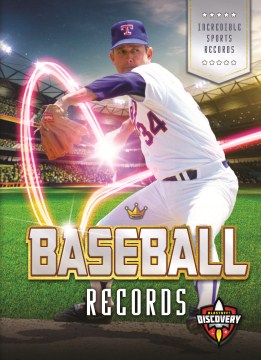
Baseball has been around for a very long time. As a result, there are many records that have been achieved and broken over the years. This book, part of the Incredible Sports Records series, goes into many team and individual records. Readers will learn about the longest game on record (26 innings!) to pitcher Cy Young’s long-time win record set in 1911. Not only are current, record-holders described; their predecessor is listed as well.
Young sports enthusiasts can rejoice in a book chock full of information about baseball greats over the long history of the sport. Glossy pictures and short write-ups detailing important records in the baseball are a pleasing addition to a somewhat crowded field of sports trivia books. Recommended.
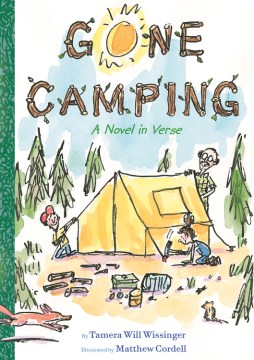
In a follow up to the popular Gone Fishing, a camping trip with grandpa is told through a variety of poetry forms. Siblings Lucy and Sam head off to the woods with grandpa when their dad comes down with a cold. Lucy is skeptical about the ‘fun’ of a trip, but Sam is all in. Their adventures, from setting up the tent to early morning fishing, are all part of a trip that goes from bad idea to wonderfully exciting for Lucy.
Each poem tells part of the story and is labeled with the poetry form, which is described in the back of the book. Poetry rhythm, rhyme and techniques are also explained, making this book multi-faceted. It is a series of short poems that expand into a full story for the reader. In addition to reading this for fun (highly recommended), this book can be used very successfully for a poetry unit.
Illustrations are done in black ink and are scattered liberally throughout the story. They add to the fun and exuberance of the words.
This book is a wonderful tribute to time spent with a grandparent. Adventures range from worries about possible critters in the tent to yummy s’mores and cannonballs into the lake. Who wouldn’t love to spend time with a grandpa (or any loving adult) doing just that?
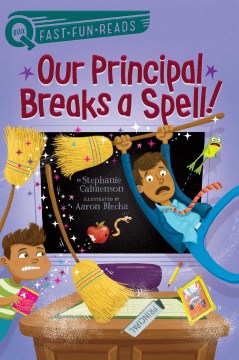
Mr. Bundy , principal of P.S. 88, receives an interesting letter and magic powder sample from a mysterious person named Olivia Martin. He is contemplating inviting her to put on an assembly when Roger, a student, comes in to assist Mr. Bundy. Students rotate through daily through Mr. Bundy’s office as helpers and Roger is a great kid. Mr. Bundy gets called out of his office and leaves responsible Roger alone to fold newsletters.
Well, even great kids can get into some mischief and Roger does just that when he sees the magic powder and has the idea to use it to turn the broom into a self-powered sweeper. The broom goes wild and ends up splitting into several brooms along the way as Roger and a few classmates try vainly to stop the craziness. Mr. Bundy steps out to the hall and sees the mayhem, which is now entering the classrooms, runs to his office and calls Olivia Martin for help. She gives him the spell to make everything right and he does so. But, he has a surprise for the students of P.S. 88. Assembly day comes and so does Olivia Martin, swooping in on a glowing broom and sprinkling magic powder around the room. Flying brooms appear and the teachers and students hop aboard for one of the best assemblies ever!
This short chapter book is a nice beginning book for those students that want to try something different than a picture book. Pages explaining the cast of characters and a word list are helpful for young readers. Black and white illustrations are simple and help move the story along. It’s a fun romp of a read for kids and refreshing to see that even the good kids can get into a little mischief sometimes!
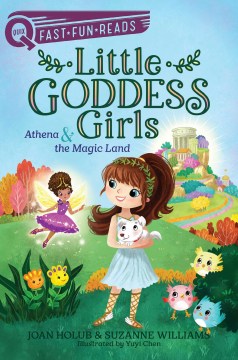
Modern day, normal Athena is on her way home from school and playing a video game along the way. She is engrossed in the game, which includes a cute digital dog named Oliver when she has a run-in with mean girl, Medusa. These people sound familiar. Not surprisingly, Athena gets swept up in a magical storm that sends her close to Mt. Olympus wearing clothes that look suspiciously Greek . A tiny goddess, Hestia, advises her to walk along the ‘Hello Brick Road’ (also familiar…) to meet Zeus, who can help her return home. Along the way, she meets up with a Medusa who looks a lot like the nasty one from home, but has snakes for hair and wants her magical sandals so badly she’ll turn Oliver to stone. Athena also helps a new friend, Persephone, who tags along hoping to ask for some magic help from Zeus, too.
We don’t find out in this book whether they make it to Mt. Olympus yet. That sets us up for future books and adventures. Black and white illustrations move the story along and unfamiliar words and characters are explained on the “Cast of characters” page and “Word List” page. There are also questions at the back for reflection. This is a simple read that will be perfect for those readers that want to move away from picture books, but aren’t quite ready for chapter books. The story line is a bit saccharine, but does introduce some mythological characters and might pique interest in further exploration.