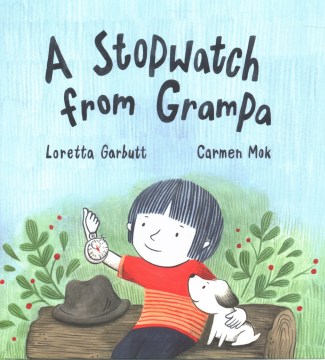
A Stopwatch from Grampa

This is a sweet, heartfelt story about a child, who feels very deeply the loss of his grandfather. They were buddies and a stopwatch that he is holding (his grandfather’s) is a symbol of their shared memories. The child is honest, though and says, “I don’t want his stopwatch. I want him.” He tosses the item into a drawer and time seems to drag on, dark and lonely. Seasons pass and he finds his grandpa’s watch again. Now, it brings him happy memories, about which he can begin to smile. He starts to use it again and includes his younger sibling in timing some of the same things he did with grandpa.

The story is lovely and a realistic portrayal of the grief that a child feels about the passing of a loved one. Soft, gentle illustrations add to the melancholic tone of the words, with just the right amount of color. The child’s face is expressive and matches the feelings that he expresses. Highly recommended. This will lead to very meaningful discussions when needed.
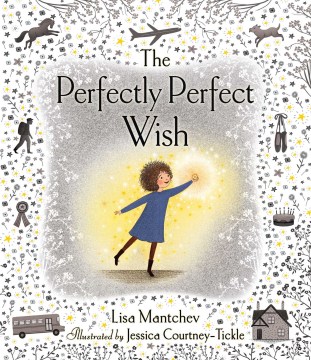
The Perfectly Perfect Wish

The girl finds a golden coin, with the words NO WISHING FOR MORE WISHES engraved on it. She spends the day at school dreaming about the one wish she has. Asking friends what they would wish for makes her realize that she already has everything she really wants and the extras can be earned through hard work or time. She then makes a truly wonderful wish – a wish that everyone else’s wish would come true. And, in the end, we see that everyone she asks receives their special wishes. Her teacher get the house she wishes for, her wheelchair bound friend gets a dog and her friend, Mark, has his military dad come home.

This warm, sweet story is a testament to generosity and empathy and will make kids really think hard about what their wishes might be. Soft grey colors with vivid shots of color at the right moments in the story move it along and give importance to important parts of the story.

Characters are diverse and the illustrations work into the story beautifully. This is definitely a book to purchase!

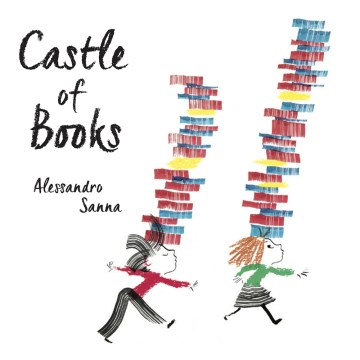
Castle of Books

Castle of Books explores all the answers to the question “Why do we need books?”. Spare text and flowing, colorful illustrations give reasons from the realistic “to observe” to the more esoteric “to grow” and “to lose ourselves”. Everything about this book encourages the reader to think to himself “Why do I need books?” and proceed to the many answers he will have!

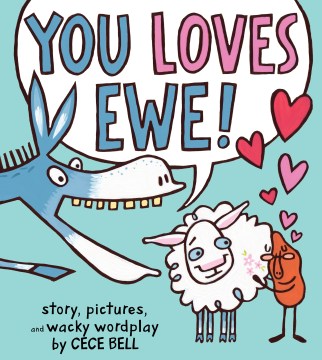
You Loves Ewe!

Dim-witted Donkey has so much difficulty with homonyms! And, there are plenty in this book, which is a follow-up to I Yam a Donkey! by Cece Bell.

Donkey comes up to two characters and greets them as fellow donkeys. Yam corrects him and introduces new friend, Ewe, to Donkey, who replies “That is ME? I yam so cute and fluffy!” And, the comical repartee ensues. Yam tries to be helpful. But, he tends to make things more difficult by showing Donkey signs and examples of Doe/Dough, Moose/Mousse and Hare/Hair. The story ends with Ewe professing her love for Ram over Yam (“Eye Dew”) and a tearful Yam being consoled by his buddy, Donkey. Oh, My!

Bright illustrations organized in blocky comic book style accompany text in word bubbles. Young readers may not understand all the comical missteps on their own. But, this is a great introduction to homonyms and can be useful as a teaching tool as well.

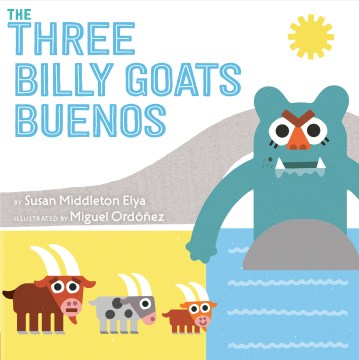
The Three Billy Goats Buenos

This is a sweet, fresh, bilingual version of the classic Three Billy Goats Gruff. In this story, three brother goats put their heads together to come up with a plan to get past the grumpy troll, where just over the bridge is the most delicious grass. One by one, they pass by the troll, extolling the superior flavor of the next goat in line. The last goat, though, wonders why the troll is so grumpy. That is when he notices the troll’s sore toe with a thorn in it. He mobilizes his brother goats and he pulls out the thorn while they prepare a poultice of herbs to soothe the offending toe. The troll is so happy that she allows them free access the the bridge and declares them all amigos.

Susan Middleton Elya (author) and Miguel Ordonez (illustrator) have taken the story to new heights with a mix of Spanish and English and a dose of cuteness in the three billy goats, with their big eyes and adorable horns. The troll is a big, blue and cartoon-like. So, she’s not really scary, even though she wants to eat the goats. The colors are bright and the story flows rather lyrically.

This is a good read-aloud, with the Spanish words in a glossary in the front, containing pronunciation and meaning. The value of teamwork, empathy and friendship will be a great discussion point with the book. Highly recommended.

Crias de hipopotamos

On the one hand, I can sometimes be a bit reluctant to spend a lot of money on non-fiction for emergent readers, because they can be a bit weak on information. But those early readers need non-fiction, too, and this one earns a lot of points on the cute factor. How can baby hippopotamuses be so ugly and so cute at the same time? With only one or two sentences per two-page spread, the information is indeed limited, but it still manages to cover all the basics, and the beautiful, full-color photos do a great job of supporting the text for beginning readers. My level of Spanish probably puts me on a par with emergent readers in this instance, and I was able to work my way through with a fairly solid level of understanding. And it’s got a good, sturdy binding, too.

Solo Pregunta!

This is a beautiful book! The illustrations are bright and celebratory. The story celebrates diversity, while recognizing that many children face challenges that make them feel different from their peer. As a group of children work together to plant a garden, each one in turns shares a personal story of challenge (diabetes, autism, asthma, allergies, wheelchairs, blindness, deafness), yet the questions that transition from one child to the next also serve as a link connecting them in their diversity. In the end, the parallel is explicitly pointed out that the garden they’ve built is full of a variety of different kinds of plants, and how boring would it be if it was all the same.

When Julia Danced Bomba

It’s a dual-language book, sharing the story in both English and Spanish. It tells about a young girl attending a Bomba dance class that she’s not real excited about at first. She’s anxious and highly self-critical. She stands behind the best dancer in the class, ostensibly so she can watch her and follow her lead, but really she just compares herself to the older girl. When she hears she’s going to be invited to perform a solo in front of her classmates, she’s so riddled with anxiety that she is not able to pay attention to those performing before her. When she actually gets started she focuses on the rhythm of the drum and gets lost in the drum and does great. It’s an okay story. I just thought it was a bit disjointed, without clear connections drawn as to what led to her change of attitude.

Oil

It’s a cautionary tale, a reminder of human messes. It doesn’t focus on how oil is made or what it is used for. It tells how it is pumped from beneath the earth and sent through a pipeline that runs 800 miles through what was once wilderness. It tells how it is pumped onto enormous ships, and how one night the Exxon Valez ran aground and spilled its cargo of oil into the ocean, where it spread for months over thousands of miles of ocean, killing sea birds and otters, and coating shorelines. It tells that thirty years later the place where it happened has never fully recovered.

How Many?

It’s a good discussion starter book around numbers and observation. A concept book about counting, it doesn’t come right out and tell the reader what is to be counted. Photos of familiar objects are presented, each of which offer several compositional elements that could be counted, leaving it up to the observer to share what they see. Sets of pictures with similar components open up discussion for the concepts of same v. different and change as well.