Encountering Bigfoot: Eyewitness Accounts

Nine eyewitness accounts of suspected bigfoot encounters, from across the United States, eight of which occurred within the past seventeen years.  These occurrences took place in Pennsylvania, Washington state, Alaska, New Jersey, Texas, Oregon, Ohio, and California. One sighting was by a postal work delivering mail, another by a snowmobiler, another by a man fishing his favorite fishing spot along a river, another by an experienced deer hunter, and yet another by a family hiking.

The book leaves the topic open ended, saying this is what these people think happened. “What do you think the men saw?” (7) “Or could it have been something else?” (9) “But could he have been mistaken about what he saw on that dark night?” (11)  And there is a disclaimer on page 3 saying, “Stories in this book are taken from eyewitness accounts and cannot be proven true or false.” The majority of the accounts were told to the Bigfoot Field Research Organization (BFRO) who found them to be credible.

The graphic novel presentation of this topic will appeal to readers. Especially since there are so few actual photos of bigfoot and most encounters seem to be short and visual.


Hap-pea all Year

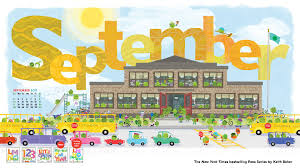
Hap pea all yearAnother delightful companion picture book. The peas are back again teaching about the different months of the year.

“Hap=pea September! Grab paper and a pen. Greet your eager teachers – school begins again”.  hap pea sept

Each month features a two page spread with rhyming text that celebrate the month and the season. The bright color and whimsical style will attract younger readers, while the detail will engage the older reader. Children can search for the one pea who is holding the corresponding number for each month (Jan – 1, Feb – 2, March – 3…).  The last two pages of the story feature each of the four seasons.

Recommended.

The Impossible Clue

What readers are looking for! A smart girl who is good at math and does not take guff about it from anyone!


Summer vacation will start any minute. Alice can hardly wait to begin her vacation. Alice plans on using vacation to prove the Goldbach’s Conjecture. Twelve year old Alice loves math! When she gets upset, instead of counting to ten, she counts using prime numbers to calm herself down.

Just prior to the last bell ringing, Sammy invites Alice to his house for a very important press conference. Sammy’s father owns Delgado Industries and an invention is about to be unveiled. Alice turns Sammy down, but gets forcefully transported to the event in a black towncar, with a, “Mr. Delgado would like to see you.” (8)

Mr. Jones, Alice’s father who writes for the Philadelphia Daily News, is also at the press conference. Mr. Delgado begins the press conference by announcing his friend and scientist inventor, Dr. Adrian Learner, is missing. The press conference will only take place once Dr. Learner has been found. Sammy is deeply disturbed. Dr. Learner might be Sammy’s only friend. Sammy wants his father to hire Alice to find Dr. Learner. Mr. Delgado hires Alice, but as a way to get publicity, as a joke. This ticks Alice off! Alice only accepts to prove to Mr. Delgado she CAN find him. Plus, her father will get the exclusive story.

Alice takes on the investigation to find Dr. Learner. She visits his top secret lab, visits his super messy apartment, and eventually pieces together Dr. Learner should be at the University of Pennsylvania where Mr. Delgado and Dr. Learner first met. In the meantime, a silver Mercedes begins to follow Alice. The FBI becomes involved, too.

When Alice does find Dr. Learner, it is not enough for Alice. She still needs to prove to herself how he disappeared. Alice’s math equation needs to be  solved,   ” (one exit)+(security camera footage)+(disappearing man)=x”.  Then, maybe the equation should be “(one exit)+(disappearing man)= x-(security camera footage) … or maybe…(one exit)+(security camera footage)= x-(disappearing man) ” . (page 258)  Little by little Alice discovers Dr. Learner’s missing medical prescription was for an experimental drug to slow down Alzheimer’s disease.

Alice holds a press conference stating Dr. Learner’s disappearance was a scam. It turns out Mr. Delgado had staged the entire disappearance to help out his friend Dr. Learner keep his disease a secret, or at least until Mr. Delgado signed a government contract for Dr. Learner’s work.

The book’s cover illustration of Alice needs some revamping, if middle schoolers are going to pick it up and read it. The existing cover is fine for fourth and fifth graders.

Keepaway Camp

On the first day of summer, Shaggy, Scooby, and their friends in Mystery, Inc., join their friend Fred on a trip to his boyhood camp.  The camp is pretty run down but Jasper, the owner, appreciates all the help he gets from Hank, the handyman.  After setting up the tent, having a meal, and telling scary stories, they relax for the evening.  Later that night a thunderstorm shakes the tent.  Looking out, they see a looming creature.  Racing off to the woods, they hide and wait out the storm.  In the morning, they follow tracks to a cave.  Although warning signs say to stay away, the kids decide to investigate.  With quick detective work, they discover the rocks are painted diamonds and the “wild ape-man” is really Hank.  Jasper is relieved and thankful.  Now he has the money to fix up the old camp.  The cartoon artwork is colorful and illustrations and text are well placed.

The Chocolate Phantom

In this graphic novel, Shaggy’s Aunt Isabelle is a judge for the Chocolate Art Show.  It is being ruined by an unknown phantom.  She enlists Shaggy and friends to help solve this mystery.  They search for clues and eventually set a trap to catch the one responsible for stopping the show.  As in most graphic novels, many details are added in the illustrations.  One point that is disturbing to me is that Scooby is shown to enjoy eating chocolate.  Chocolate can be toxic to dogs depending on the type of chocolate and the size of the dog.  A young reader may get the idea it is okay to feed chocolate to their pet.

The Story of the Orange Bowl

Back in the 1930s, Earnie Seiler was a tireless promoter of what was to become the Orange Bowl, one of the final major football contests of the season.  Seiler enticed top teams, the Oklahoma Sooners and the Tennessee Volunteers, to face off in the first game played in Miami.  The other chapters highlight noteworthy competitions and athletes from 1939 to 2012.  Anecdotes, sidebars, and photographs accompany the fact-filled pages.  Also included are a timeline of memorable  events, Orange Bowl records, and quotes.  Additional resources include books, websites, and a place to visit are in the back with the glossary, index and note about the author.  Extraordinary players and remarkable plays throughout add interest to this fact-filled book.

The Mystery of the Sphinx

The sphinx and the pyramids in Egypt’s Sahara Desert have intrigued people for thousands of years.  Scientists, archeologists, and scholars have studied, excavated, repaired, and wondered about the creation and purpose of the sphinx.  Which came first, the sphinx or the pyramids?  The sphinx is carved from a single rock.  How old is it?  Why does it have the head of a man and the body of a lion?  Why has it eroded as it has?  What ties does it have to the pharaohs’ pyramids?  Does it contain hidden chambers?  People are concerned with the future preservation of the sphinx.  Erosion, some natural and some man-made, have caused cracks and flaking.  All-in-all, this remarkable structure has created more questions than answers.  Primary sources, sidebars, diagrams, comprehension questions, pros and cons of particular theories, as well as points to consider fill this interesting book.

Charles Drew: Distinguished Surgeon and Blood Researcher

This biography is of Dr. Charles Drew and his amazing contributions to science concerning blood.  Born in 1904 in Washington DC, Drew, an African American, had more opportunities for a solid education.  Because of DC’s large African American population, schools were good.  He excelled in sports, was a dedicated student, and received a scholarship to Amherst.   Wanting to begin school before fall, he instead attended McGill University in Montreal.  There he realized a dire need for a reliable blood supply.  He returned to Wash. DC as a doctor and surgeon.  He was chosen to study and train with renowned doctors and in 1939, learned how to preserve blood for transfusions.  This led to the life saving creation of the blood bank.  During WWII, Dr. Drew experimented with plasma, the fluid in blood.  It could be preserved and used more easily than whole blood.  The Red Cross organized a donor program and a blood mobile was used for transportation.  Because of racism, the military refused to accept blood from non-whites.  Drew left the Red Cross and returned to teaching, becoming chief of staff, and medical director at Freedman Hospital.  Dr. Drew died at 45 as a result of a car crash.  Some speculate about his care as hospitals were still segregated at the time.  A remarkable story about a remarkable man.  Photographs and sidebars are on every page.  One can read and respond to primary sources.  Diagrams, questions to ponder, glossary, resources, and index included.

The Oddest Superstitions of All Time

Several sports are represented in which players exhibit strange superstitions based on achieving a perfect performance.  In this book, all players are male, both from team and individual sports.  Tennis star Rafael Nadal has a whole routine he follows before and during the game.  A football coach eats grass to “keep himself grounded”.  Hockey players don’t shave until the Stanley Cup playoffs are over.  Baseball’s Wade Boggs ate chicken daily before games.  Basketball coach Jerry Tarkanian chewed a water soaked towel to stay cool.  The layout is pleasing with photos and well-spaced text.  An extra page at the end provides a few additional superstitions.  Packed with trivia, this will be popular with sports fans.  Two other recommended books on sport superstitions are mentioned, as well as a website, index, and note about the author.

The Whale

An odd mixture of animals, Pandora, a cat, Seabold, a dog, and three mice, Whistler, Lila, and baby Tiny, have come together to form the lighthouse family.  One day, while collecting shells, Lila and Whistler hear the crying of a baby beluga whale.  They learn his name is Sebastian and that he cannot find his mother.  Pandora suggests they enlist the aid of Huck, a cranky cormorant.  With encouragement, Huck is persuaded to fly over the ocean to try to locate Sebastian’s mother.  By the time they spot the beluga pod, Huck is too exhausted to fly home.  With praise about being noble, Huck allows himself to ride home on the back of a whale.  Mother and son are reunited, the lighthouse family had a successful adventure, and cranky old Huck was secretly pleased by praise for being a hero.  McDaniel’s soft, sepia-like graphite illustrations give a pleasant old-fashioned quality to the book.  His artwork charmingly portrays the traits and character of each individual.  Rylant’s books are good for those readers who are reluctant to move from picture books to longer chapter books.  This is a reissue of book number three in a series of seven adventures of the lighthouse family.