Tuniit: Mysterious Folk of the Arctic

When I think of the native people of the Arctic regions the Inuit come to mind. This book explores the Tuniit, a people who lived in the Arctic prior to the Inuit. The Tuniit were not nomads like the Inuit. The Tuniit used flint tools and had stone shelters. The Tuniit were a shy people who had their own ways of hunting, surviving, and understanding the world. They were not just an early Inuit culture. “Tuniit are very special beings, because they blend the realms of Inuit myth and fact. Scientists say that they existed. But if we go by what Inuit stories have to say about them, the Tuniit were anything but normal people.” (p. 2) The Tuniit were extremely strong. “The strength of the Tuniit was said to be so great, in fact, that they did not always need spears to kill their prey. It is said that if they caught their prey by running it down,…they could snap the neck of even a bull caribou by simply wrestling with it.” (.13)

In the 1920s, anthropologist Diamond Jenness gave the Tuniit the name Dorset when he realized they were culture separate from the Inuit.

No one knows why they disappeared, perhaps they were exterminated by the Inuit, or they intermarried, or plague.

Make Money Choices

Primary age students all seem to know what they want. They may want candy, a new toy, or a pet, but how do they learn to make a choice between what they want and what they need. This book written by Mary Reina helps young readers tell the difference and it “supports national social studies standards related to production, distribution, and consumption.” (from Note to Parents and Teachers- p. 2)

The opening lines are: “We choose how to use our money. Spending, saving, and donating are all money choices. What choices will you make?”  (p. 5) The young reader is given a simple definition- “Needs are things you must have.” (p. 7) plus some typical examples. Then given the simple definition: “Wants are nice but you can live without them.” (p.9) with the examples from above. Then it process to tell that sometimes the choices are not so simple, as when you need new shoes but the ones you want are not practical. You want something to eat, but should you choose fruit or candy. Which is better for your health. The reader then so told about saving part of their money to purchase a bigger item they want at a latter time. Finally, donating money to a cause that needs money, in this case a school bake sale, is given as a suggestion. The book ends with:            “Making good money choices teaches you to use money wisely. You won’t waste money. Then you can keep more of the money you earn.”  (p. 21)

There are two or three sentences on each right-hand page across from an appropriate photo on the left-hand page. Photos throughout the book are multi cultural. While the book measures 6.5″  X 7.5″, it covers a big topic well for this age group.


Includes: glossary, index, www.facthound.com, and two ‘Critical Thinking Using the Common Core’ questions.


Skateboard Party

Author, Karen English, must have been camping out inside a third grade boy’s head to have written such a realistic story! The cause and effect elements of each of Richard’s actions could not have been more right-on.

Richard can not wait for the weekend to begin. Richard isn’t going to let his teacher;s note about his poor grades spoil it, either. Richard thinks about the note several times over the weekend. but never takes it out of his backpack. It is still there untouched on Monday morning on Richard’s way to school.  In class, Richard tells his teacher, Ms. Shelby-Ortiz, he forgot the note at home. Ms. Shelby-Ortiz has him write his name on the whiteboard to remind her to ask him first thing tomorrow morning.

When Richard gets home there is a blob of melted plastic on the table surrounded by is brothers and mother. It’s the cereal he’d temporarily hidden in the oven on Saturday morning to prevent his older brothers from eating it all. Mom had unknowingly melted it when she turned on the oven to make cookies. There will be no TV or friends over today for Richard.

The next day Richard’s brother finds the note from Ms. Shelby-Ortiz. Darnell has Richard do his dinner dishes job in exchange for getting the note back. The next day Ms. Shelby-Ortiz calls Richard on not having the note signed. No recess until it is back and signed. Plus, a phone call if this doesn’t happen by tomorrow- Wednesday. Richard is so down-in-the-dumps at dinner Mom asks him what is wrong. Richard tells about the note and how Darnell is in possession of it. Punishment time! No TV, no video games, no skate boarding party, no friends over, no dessert, and 100% on next Friday’s spelling test! After the parents meeting with Ms. Shelby-Ortiz there are even more consequences for Richard.

The day of the long awaited skate boarding party comes, but so does a thunder and lightning storm. The party is postponed a week. Richard rejoices at the thought of not missing the party  because his punishment will be over by then. Now Richard begins his missing report on howler monkeys, that began this whole saga, only to find out howler monkeys are quite interesting.

Richard’s week of restrictions is filled with his best school work, studying spelling during missed recesses, and writing his report. He has no time for TV, or video games, and practicing a new skate boarding trick. But it all pays off on Friday, when he first passes his spelling test, and then presents his howler monkey report. “His week of punishment is over.” (p. 104)  Richard decides he is not ready to show-off his flat ground-ollie over a crate at the party, instead Richard does a flat ground-ollie. “Oh, well, Richard thinks. He doesn’t care. He did it! And he didn’t fall!”            That alone feels great. He picks up his board and climbs the steps to where Gavin is sitting in the bleachers with a big grin on his face.” (p. 113)


Throughout each of the eleven chapters there are two or three black and grey stretches which drive home the point of the text.


  • One small mistake, there is a period missing on the ninth line on page 25.



Detective Gordon: The First Case

Detective Gordon: The First Case is the perfect book for kids who have finished beginning chapter books and are ready for a longer story.  It’s about a squirrel who has had their winter supply of nuts stolen and went to the police, an old toad, for help.  The old toad, Detective Gordon, goes to the scene of the crime and determines to investigate, telling the squirrel to go home and to keep warm inside, away from this freezing weather.  After awhile a shivering little mouse comes out with an acorn.  She took it because she was so hungry.  She helps Detective Gordon become un-stuck from the snow and together they go back to the police station.  She becomes his assistant.  The story goes on in such a fashion showing compassion for the needy, and is a story reminiscent of days gone by.  This would be a perfect read aloud for the younger grades.

Nomad

I found reading NOMAD to be like putting together a large jigsaw puzzle in which some of the pieces are missing. Bit by bit, I reasoned out that this was the second book in a series. I enjoyed the story-line at the end of the book and am glad I read the entire thing, but feel many younger reader would not do so if they hadn’t read the first book. Somehow, the book’s front cover did not lend itself to this discovery, though the praise on the back of the cover for AMBASSADOR should have. The cover art is intriguing for the genre and sci-fi reader.

Gabe Fuentes, it turns out, is an intergalactic ambassador to the planet Earth. The people of Earth do not recognize there even is such a thing because the embassies on Earth have gone to ruin. [ Here the missing puzzle piece may have implied the ancient embassy was an Aztec temple in Mexico. I do not know for sure.]  Gabe and the other ambassadors have special abilities that allow them to travel through a dream state of consciousness when and where their actual bodies are not able to travel. There are special translators which allow Gabe and other the ambassadors to see each other in human-form, even when the species do not naturally look that way. These translators, also, help with languages between the species. The translations aren’t always easy for Gabe to understand, like ” Our faces have grown wide for you.” (p. 178) which means, “She’s proud of us.

Somewhere along the line [another missing puzzle piece] Gabe and the ambassadors have come across the Outlast who travel through space destroying all the species they come across. It is Gabe’s mission to stop this from happening to Earth which is in the Outlast’s direct path of flight.

Gabe makes it back to Earth, with  one ambassador (Nadia) helping from space, and another (Kaen) helping him on Earth.  They land in Mexico which is familiar to the other (non-Earthen) ambassador. They cross into the United States only to be caught and locked up in  an immigration detention facility in Arizona.  For Nadia’s part, she must explain to the Machinae “Why they  should care? I need to explain to an utterly alien consciousness why genocide is bad.” (p. 252) One Outlast makes it to Earth and finds Gabe, the rest are stopped by the Machinae’s decision to oppose genocide at the hands of the Outlast.

Evil Fairies Love Hair

This book will appeal to girls who love fairies and fantasy.  Ali has the perfect sister whom their parents praise and she will  do anything to get the attention she thinks she deserves.  She signs a contract agreeing to raise 100 fairies, recruit another child to so the same, in return for one wish.  Right there Ali should have seen a red flag:  100 for one?  Not fair.  But Ali sees no problem, until it is.  The fairies turn out to be lots of work and lots of trouble, all for one wish.

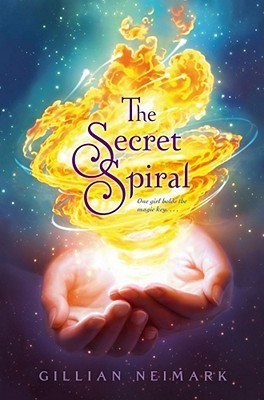
The Secret Spiral

secret spiralSeeing the future across the curve of time, travelers from another world (one who loves to talk in rhyme), a magical hat that acts as transport and can expand to easily fit five people, an ancient wizard and a special secret.

An adventure through time and space. Ten year old Flor Bernoulli of Brooklyn, New York, has to save the world and the life of a new found friend. Aided by Dr. Pi, a pie-baking wizard thousands of years old, a nosy neighbor Mrs. Plump (who doesn’t like sugar, “just tea and toast please”) and a pair of twin men from another world, Mr. It and Mr. Bit. Flor has to protect a singular cosmic fire that keeps nature in balance throughout the universe

Dr. Pi explains the spiral to Flor: “It gets bigger and bigger without changing its shape at all.” And he reveals to her that, “…we are all like the Spiral. Though we change and grow and learn through life, something deep in us remains the same. Just like the Spiral, which gets bigger and bigger, but never changes its proportions. And so, we too are always changed, and ever the same.”
An interesting way to bring mathematical concepts into the literary realm.


secret spiral2
(Newest cover)

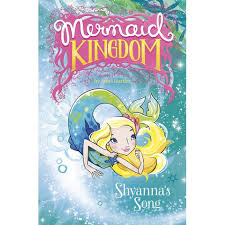
Shyanna’s Song

shyannaSince her father’s death, song has left Shyanna’s life.  She no longer sings nor does her mother. But this is the year the Shyanna decides to change that. Even though she has terrible stage fright, Shyanna decides to enter the Melody pageant that is held every year in the mermaid kingdom (think American Idol) . Shyanna wants to enter the competition in order to inspire her mother to love music again.  Shyanna thinks she has a pretty good chance to win until she meets her greatest competition, Rachel, the pretty mermaid who is new to town.

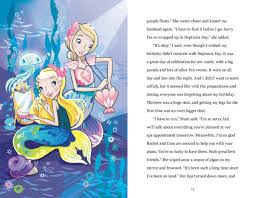
An engaging story for children and adults alike. Lessons on friendship, courage, perseverance and safety. An unexpected twist at the end made this an even more enjoyable read. The sporadic, full color illustrations will beg the reader to linger a little longer. Back matter includes: legend of mermaids, questions for discussion, writing prompts and the author and illustrator bios.

shyanna inside


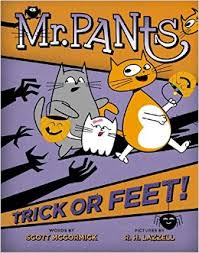
Mr. Pants Trick or Feet!

Mr Pants TrickThird in the series of Mr. Pants books, Trick or Feet is as funny and entertaining as the other books.

It’s Halloween and all Mr. Pants and his siblings, Foot Foot and Grommy, want is to get lots of candy and play zombie tag. But their plans are ruined when they get stuck in the airport because of bad weather. All is not lost when Mom saves the situation and hilarity ensues.

From an elementary school librarian’s point of view, this is a book series that will be destroyed from overuse – a very good thing.  Children will identify with the antics of the three siblings. For readers who want chapter books (but who may not be ready for the “real thing”) these books will be a good transitional choice.


Bottom line: full color, engaging, humorous and worth buying the series for your young readers.