Candy is an elementary school librarian in Shelton, WA at the school where she was a student (so many years ago!). Her library is unique in that she brings her background and love of biology to her students in many ways. Not only does she have an awesome selection of science books; she also has a beaver, bobcat and mink sitting on her shelves and a variety of jarred specimens for her students to study. When she's not in the library, she is taking care of her baby trees on her tree farm and hanging out with her family and many pets. * 2025 WA Library Association School Librarian of the Year
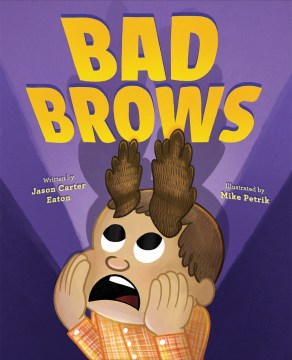
Children’s books can be silly, sad, serious or goofy. But, it is not often that you can call a picture book “absolutely weird”! This story is just that – weird! Bernard wakes up one morning and his eyebrows have taken on a life of their own. He tries to smooth them down, but to no avail. They bunch up, grow to crazy lengths, bush out, tie in knots and all sorts of other strange activity ensues. Bernard has no control over his brows and those around him are offended, angered and stumped by their unruliness (and place a bit of the blame on Bernard). Fortunately, things calm down for Bernard when his real eyebrows return. Apparently, they were on vacation. Hmmm…where did the substitute brow go? The answer is on the last page on his baby sister’s forehead. Oh, no!
Cartoon-like illustrations match the weirdness of the text. Characters are diverse, which is one normal part of this book. Hand this to your readers who like some of the stranger cartoons on television, like Gravity Falls or Steven Universe. They’ll understand this book.
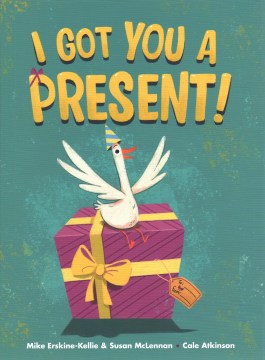
It’s a birthday party and Duck comes bearing…nothing! He tells a story of his search for the perfect gift, from socks that took six months to make (and still look pretty bad) to a a really cool rocket ship that some lost aliens needed to use to fly home. But, all is not lost! Duck has the perfect gift – this story! What could be better than a story about your favorite things and your good friend, Duck?
Fans of silly friendship stories like Elephant and Piggie will enjoy this zany duck and his mishaps as he tries to find the perfect gift for his friend. Illustrations are bright and cartoon-like. Duck is animated and engaging as he moves from gift to gift in his search for the perfect one. Recommended.
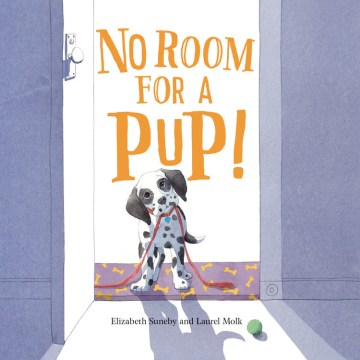
Mia really wants a puppy! But, her mom doesn’t feel like there is room in their small apartment in a big city. Mia’s grandma lives down the hall with her parrot, Roger and Mia goes there every morning for breakfast. In the elevator one morning, they read a sign about puppies that need homes. Mia hatches a plan and grandma mobilizes her friends. The next morning, grandma and Roger show up at the door and grandma says they have to stay (her apartment is being painted). Then, Mia brings home the class rabbit for the night and neighbors drop off their pets. The next morning, grandma’s book club friends and their pets drop by Mia’s apartment. It is absolute chaos! Mia’s mom is overwhelmed. When they all leave, Mia’s mom remarks that the apartment doesn’t feel so small anymore. That’s when Mia brings out Spot, the puppy she chose from the neighbor’s litter. And, mom agrees that there is room for one small puppy. The final page shows that puppy all grown up into a very large, much-loved Great Dane!
This story is a modern twist on a Yiddish folktale about gratitude for what one has. Illustrations are watercolor and picture a diverse set of characters, both human and animal. This is a fun story for any pet-loving child.
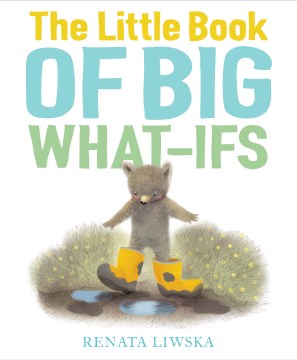
What if? That is the question on each page of this sweet book. A series of scenarios, some silly and small, others really big and thought provoking, provide wonderful jumping points for discussion. Illustrated in pencil with softly rendered animals in various settings.
Read aloud to students “What if you swallowed a seed?” and you will get all sorts of answers. Read “What if we find one thing in common?” and begin to build awareness that we really aren’t that different. This lovely little book has the potential to invoke thoughtful, meaningful discussion and possible change. All of that in 32 pages.
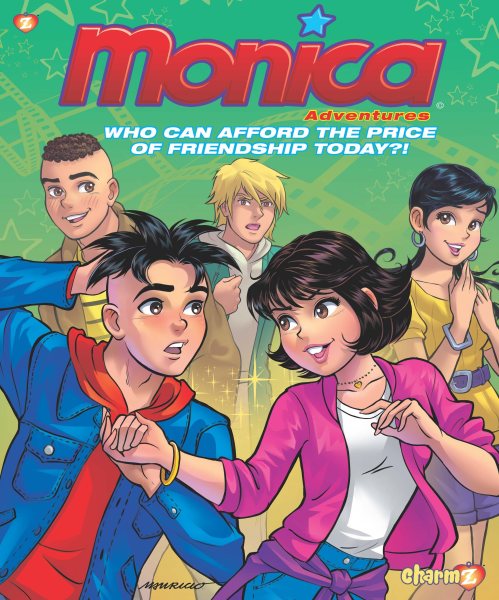
This is the first graphic novel in a series about the adventures of teenage girl Monica and her friend group, “Monica’s Gang.” It’s actually based on a widely-loved comic strip from Brazil that started in the 1960s. While the insanely popular comics were about the adventures of a group of kids, the graphic novel follows the same group as teens as they try to navigate their changing relationships and new challenges while still maintaining their strong friendships with each other.
It’s a fun story very reminiscent of Archie comics, and it was neat learning about the comic’s history at the end and noticing sprinklings of the classic comic referenced in the graphic novel. I found I was able to follow along with the story without having any background in the comics previously. The illustrations were fun and the characters were engaging and animated.
I did find issue with a couple elements in the story that I feel detracted from the book overall. This is intended for kids aged 8-12, but it focused pretty heavily on Monica and her friend J-Five’s growing affection for each other. I wished it was more about their friend group’s random adventures and less about romance. Additionally, Monica’s friend Maggy is really focused on the caloric content of foods. In her character description at the start, the book says she’s “…virtually obsessed with proper nutrition, sports, and exercise…” but instead of showing an interest in nutrition, she just seemed obsessed with how many calories were in what she was eating. There’s also a couple in one scene (page 56) where the girl explains to her date that girls have to care more about calories and fat because “If we were to stop and think like you boys…we wouldn’t have these bodies and we’d have big ol’ bellies!” and then an image is depicted showing a guy with a little bit of a stomach next to a thin girl. She proceeds to tell her date that he should get back to working out more. I know it’s a comic, but these “jokes” fell flat on me and I don’t think they are what we should be encouraging for little kids. I may have felt better if Maggy was shown that eating healthily is about balance (It could have been a good teaching moment.), but instead the other characters just kinda rolled their eyes and got her low-calorie stuff, or they just laughed about it. Pages 12-14 further show strange food comments (“I need to maintain my silhouette, girl!”) and show the girls, all thin with large breasts, in bikinis on the beach.
Overall, it was a cute story and it’s always fun to see beloved comics get reimagined and reintroduced to new audiences. However, it just doesn’t sit well in a 2020 library, and I wish they had updated their perceptions on body image with their updated look and format.
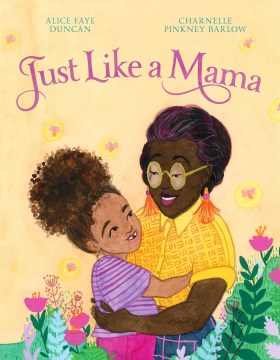
Carol Olivia Clementine lives with Mama Rose and not her parents, who live far away. Although, she misses her parents, she knows she is loved and cared for by Mama Rose. The story progresses through two birthdays with Mama Rose as she and Carol Olivia Clementine go through their days like any other family. Mama Rose combs her and reminds her to do her chores and eat her peas. And, Carol Olivia Clementine refers to Mama Rose as her “home”.
The illustrations are colorful and convey the tender relationship between the two. Both characters are African American. Endpapers show “photos” of Carol Olivia Clementine and Mama Rose as well as photos of her with a man and woman (her birth parents?).
This is a lovely story of a nontraditional family. We don’t know why Carol Olivia Clementine’s parents aren’t with her. We also don’t know if Mama Rose is a foster or adoptive parent or even an elder relative. But, we do know that Carol Olivia Clementine and Mama Rose care for each other very much and that is what matters the most.
This book is perfect to read to students during a family unit or Mother’s Day. It might be relevant to share the author’s end note, which describes her own family as the driving force behind this story. This is a welcome addition in a time when many students live in a nontraditional, non-nuclear family. Highly recommended.
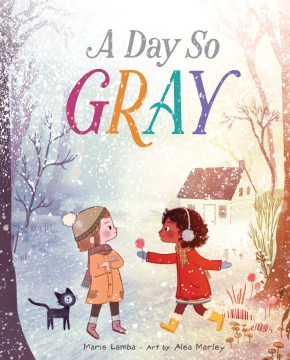
Two little girls look out the window at the snow. One sees only gray. But, as they walk outside, her friend shows her the blues, browns and silvers. They move about, one seeing only a single dull color and the other revealing the beauty of all the colors around it. The story ends with the girls in front of a cozy fire with their blanket and cat, drinking brown (white and grey) cocoa together.
Illustrations are beautifully rendered, with crisply drawn elements on soft background tones. The two friends’ attitudes are clear in their stances. One girl sees only single, drab colors as she stands with arms crossed or a frown. Her friend smiles as she notices all the other colors around them.
This is a story that serves to remind us that there is more than what we first notice. It could be colors or the positive around us. We just have to see them! Highly recommended.
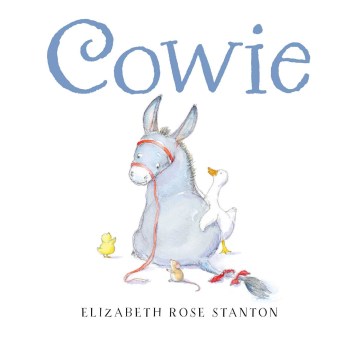
Cowie, the donkey, loved everything about cows (hence, his name). He really wanted to be a cow and tried everything, from chewing cud to “oom-ing”. Whoops, he couldn’t be a cow! He couldn’t say “Moo”! His dear friends, Mousie and Duckie, tried to help him turn his “moo” around and, somehow, do so. After a brief celebration, Cowie (now adorned with his beautiful cowbell) spends the rest of days in contentment.
While the story is a bit silly, the illustrations of pencil and watercolor make up for it. The animals are sweetly portrayed and there’s even a cute little chick that pops in on occasion. Additional purchase.
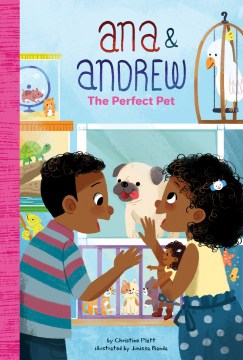
Ana and Andrew are great kids and their parents have noticed. So, Mama and Papa announce that the siblings can choose a pet to take care of together. They research and narrow it down to three, finally choosing a hamster. Ana and Andrew find the perfect hamster, a golden one that loves to run on his wheel. Now, the fun part comes – what to name their new pet? They decide to name him after someone who runs super fast. Their parents tell them about a famous Black track athlete, Jesse Owens, who won four gold medals in track at the 1936 Olympics. They describe how important his achievement was at a time when people thought skin color made some people better than others. But, Jesse Owens showed that skin color didn’t determine a person’s abilities. Right then and there, Ana and Andrew knew that their hamster would be named Mr. Jesse. And, it was perfect!
At 32 pages, this easy reader chapter book is a great bridge between picture books and more traditional chapter books. Glossy pages and color illustrations are more picture book-like. The characters are diverse. This book is part of the Ana & Andrew series, which introduces an aspect of African American history and culture in each book. Recommended.
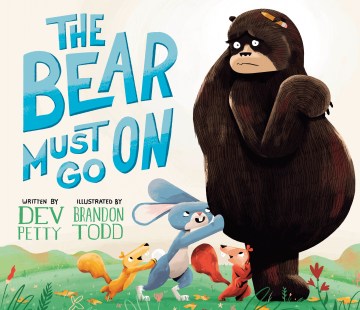
Bear and his friends (Squirrel, Other Squirrel and Rabbit) work together to prepare a really big show for their forest friends. This includes a sparkly curtain, tiny hats for birds and shiny tickets. Bear keeps meticulous notes as the self-appointed “note taker”, because he does not want to perform (he’s nervous). Frenzied preparations ensue and bear takes lots of notes. The big night arrives and all the forest creatures are waiting in the audience. There’s one problem, though. They forgot to write a show! Oh, no!!!
Luckily, Bear comes through and mentions that he has a song that he created. They beg him to perform and he finally agrees. The forest creatures love it! The show is a success! Thanks goodness for Bear.
The story moves along at a quick pace, helped along by the illustrations, some in comic panel-like sequences. Colors are bright and energetic and Bear’s notes are front and center a few times, which help with the busyness of the story. Bear’s nervousness is acknowledged and his bravery in going up to the stage to sing is noted. Maybe, this story will encourage some human friends to work together and put on a show! Recommended.