Hoop Genius: How a desperate teacher and a rowdy gym class invented basketball

The hoop genius is James Naismith, a high school gym teacher, with a class of rowdy boys that no one wanted.  Naismith tried all sorts of games but to no avail.  His boys were beat up and bandaged from the physicality of the games.  Until one day he remembered a game from his own childhood in which the target was up in the air and the player had to accurate throw a rock to knock it off its stand.  Instead of a rock he used a soccer ball.  He used an actual basket for the target and he instituted fouls for pushing, tripping and holding.  If a player had two fouls they had to sit on the bench.  The popularity of the game spread nationwide and worldwide.

Students enjoyed hearing how basketball got started.  However, it was the illustrations which threw them off.  They thought the students looked too old to be students, they had mustaches and facial hair.  In looking at the original photograph of the gym class that’s at the back of the book, they do, in fact, have mustaches and do look older than high school students.  The illustrator used the photograph to make accurate illustrations.
The Last Tiger

The Last Tiger is a treat to both your eyes and your soul.  The story is about the last tiger left in the world, a world in which there no longer existed animals or trees or flowers.  The environment was dirty and cluttered, filled with castoffs.  People no longer cared.  But Luka cared, and he  befriended tiger who needed his help.  They became best friends until one day the lion was captured and put into a cage.  Again, Luka helped the lion get free by showing the people the lion’s cave, in which all manner of trees and plants and flowers bloomed, with no garbage or clutter.  People once again saw what life could be like.

The story is simple and idealistic, but clearly states the message in the very first sentence of the book….the people had forgotten what was important.  What is important?  Is it friendship?  Empathy?  Cleanliness?  The illustrations are in tune with the story, simple and blending in well, not cluttered but still detailed.  This would be a great book for Earth Day as well as just about any other day of the year.

Barry

Colin Thompson is so clever and has a vivid imagination and gift of storytelling.  Barry is an alien-made robot who came to planet earth with his makers, but got left behind.  He doesn’t look like much, mostly put together from recycled cans and odds and ends.  But he has a huge brain which is back on his planet and which he can access.  Barry is stuck down in an old sofa and lives there through many generations of mice, dust, and lost items.  His job is to control events and natural disasters on earth, but because of his precarious position and loss of body parts, things on earth are not what they should be.  Barry is discovered by humans, taken out of the sofa, and put on a shelf.  From there he can see the results of his mismanagement, and he sets out to correct it.  In the past, the Ice Age took care of life on earth by destroying it and allowing itself to regenerate.  Barry figures the same thing will work again.  Thompson has some subtle humor which the young children will not understand, but the grown-ups reading this story to them will.  The illustrations are what will hypnotize the younger set and will capture their attention for many hours.  I could see kids trying to replicate the image of Barry by making a recycled robot and creating stories of what their robot can do.  Hugely entertaining.

Tricky Tarantulas

Divided into 2 sections, this book on unusual pets begins with basic facts.  Because there are often laws about owning unusual pets, the reader is advised to check state laws.  Facts include details about preferred environments, food, and care.  The second section is atypical of most animal fact books.  This section is a rhyming short story about a young boy’s pet tarantula.  It is an interesting combination of genres.  The book ends with a page of additional facts, a short quiz, and a glossary.  Photographs are large, illustrations colorful, and large font text is simple.  This is a good introduction to an unusual pet for younger readers.

Tales for Very Picky Eaters

What a fun book!  James is a very picky eater – most families have one.  Dad needs to get inventive to entice his son to try meals.  Divided into 5 chapters, in the first, James is encouraged to eat broccoli or choose between the finest dirt, walked on by only the best chefs wearing deluxe boots, fastidiously already-chewed gum, or a smelly sock worn by the world’s fastest marathon runner.  He tries smelly mushroom lasagna so Dad won’t fire the troll in the basement.  Refusing to drink repulsive milk would have the undesirable result of soft bones, which would mean he could not play baseball with friends or even scratch his dog.  By the end of the book, James is suspicious of another underhanded trick by Dad to get him to try the slimy eggs until he decides to try them simply because he might like them.  The watercolor, pen, and ink illustrations are humorous and are a wonderful match to this amusing story of a very picky eater.  This provides a smooth transition into chapter books for those resisting the move away from picture books.

Kisses for Daddy

Grumbly little Baby Bear does not want to give his parents a kiss before taking a bath before bed.  Daddy gets inventive and asks if Baby Bear would like to give a giraffe kiss as he holds Baby Bear up high.  Baby refuses.  As he carries Baby Bear upstairs, Daddy asks if he would like to give a cuddly koala kiss.  Baby refuses.  In the bath, Daddy asks for a crocodile kiss.  As Baby giggles and resists giving Daddy all kinds of kisses, Daddy steadily gets him ready for bed.  Yet in the end, Baby does have one surprise left for Dad.  The warm and tender illustrations are a wonderful mix with this affectionate story of a bedtime routine.

Mountain Rescue

“Hikers, mountaineers, rock climbers, skiers, and forest workers all play and work in the mountains. They need to be rescued if they get lost in weather, trapped on a cliff, injured in a fall, or become sick.” (page6) 13 factual 2 page spreads briefly describe the why, who, and how of mountain rescues. Mention is given to wind, cold, avalanche, first aid, helicopters, dogs, and radio/phone equipment.  Well chosen color photos give equal time to snow and non-snow rescue scenes. Thirteen photos show the teamwork approach needed in mountain rescues. While helicopters are important, they are not always used. Only nine helicopters appear throughout this book.

Large font text.

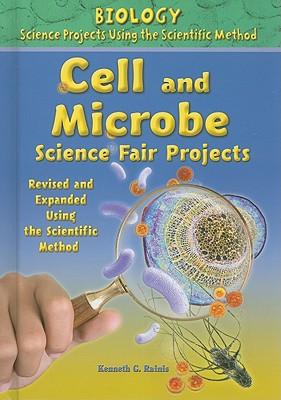
Cell and Microbe Science Fair Projects

For upper elementary and middle school students, this book is an introduction to cells and microbes.   A dozen different science experiments are detailed in a step-by-step fashion starting with a basic question and then moving from hypothesis through procedure to the result and conclusion.  The introduction addresses topics such as: How Scientists Search for Answers, Using the Scientific Method, designing the experiment, recording data, writing the science fair report and tips for success at the science fair.  Illustrations, charts, graphs and macro-photography aid in understanding.   Table of contents, index, further reading list, internet sites list, and three appendices: microbe identification guide, microscopy and image processing, and science supply companies round out the book.

This will be a heavy read for 5th and 6th grade, but the experiments are easy to accomplish and to understand, making it a good choice for students who want more of a challenge.


Howard B. Wigglebottom Learns about Courage

This fun story is a great way to help children to learn how to overcome their fears.  The lessons at the back to help adults help the child work through their fears is very informative and helpful.

The pictures were fun, the story easy for a child to identify with, and very positive, even when mastering a fear takes longer than expected.  I liked this book.