
Bianca struggle for self-control is edgy and probably a bit too sexy for a school audience in Kody Keplinger’s The Duff (Designated Ugly Fat Friend). The storyline is pretty predictable but the redeeming value is Bianca’s reflective, smart, sometimes in-your-face voice as the narrator. Bianca is best friends with two girls she believes are much more attractive than her. To appease her friends, she often sits on the sideline of their teen hangout while they dance the night away. Enter Wesley Rush, one of the most attractive and sexually active boys in the school. Wesley informs Bianca that he’ll hang out by her in order to attract her best friends’ attentions because she’s the DUFF of the group. After drowning him in Cherry Coke, one would think Bianca would have nothing to do with him again. But then the plot gets interesting, and quite hot. Biance turns the tables, or bed, so to speak on Wesley. To escape her stress about being the DUFF, as well as her parents imminent divorce, she turns to Wesley, who will sleep with anything. Throughout the story, Bianca goes from highs to lows. She’s honest with her intentions, but sometimes a bit too self absorbed, like EVERY teenager out there. There is a happy ending in it all, and upper high school or public library patrons will probably enjoy this more than they might admit in person. (Blush, blush).
Monthly Archives: April 2013
Brothers at bat: the true story of an amazing all-brother baseball team
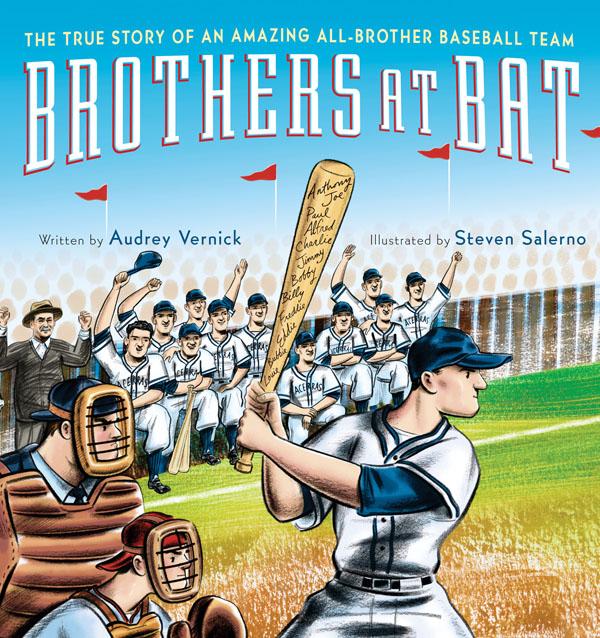
Summary: Here’s a story that seems almost impossible to believe, but yet it is a true story about an American family. The Acerra family had 16 children. Twelve were boys, just enough to field a baseball team! This was the 1930s, and times were tough, but they stuck together as a family. They had one passion: baseball! It brought them a lot of joy and a lot of fun! And they were really good players! In 1938, the brothers ranged in age from seven to thirty-two. The oldest nine brothers formed a semi-pro team! They played around on the East Coast and the always drew a crowd! In the 1940s six of the brothers went to war, but they all came back and played in a baseball league another six years. They played their last game in 1952.
What I liked about it: It’s a positive story about a family working together. Salerno’s illustrations have a retro feel from the period from the 40s and 50s that match the time period perfectly. Author and Illustrator add historical detail on the last page.
Who would like it: The picture book format would suggest a younger audience: K-3rd grade, but anyone would enjoy this all-American story. Highly recommended.
Njinga: The Warrior Queen. (The Thinking Girl’s Treasury of Dastardly Dames)
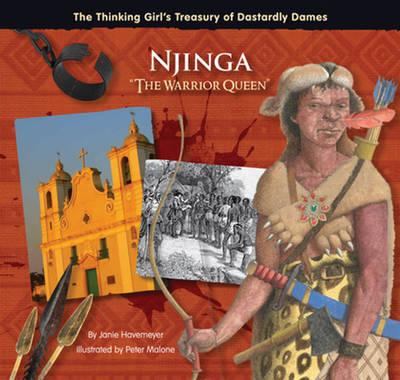
Summary: As part of the series, “The Thinking Girl’s Treasury of Dastardly Dames,” Njinga, the Warrior Queen tells the story of a young girl growing up in West Africa. Njinga was born into a royal African family in 1583. When she was born, the soothsayers predicted she would not be an easy person. Njinga was a clever girl and her father noticed and taught her how to be a ruler. After her father died, Njinga’s loyalty was always to her people. She strived for sovereignty against other raiding tribes, the encroaching Portuguese and the slave trade. To do this she had to be ruthless. How dastardly was she? Read on.
What I liked about it: Drawings and paintings interspersed through the text make this period come alive. The details of Njinga’s life add interest to the story, such as what she ate or wore. (For example, she would dress like a man when she went into battle.) . Author Janie Havemeyer is a former elementary teacher and museum educator. Illustrator Peter Malone has illustrated the entire series about “Dastardly dames.”
(Includes a bibliography for further reading.)
Who I would recommend it to: Recommend this series to girls in grade 4-8. Recommended for schools and public libraries.
Heroes of the surf: A rescue story based on true events
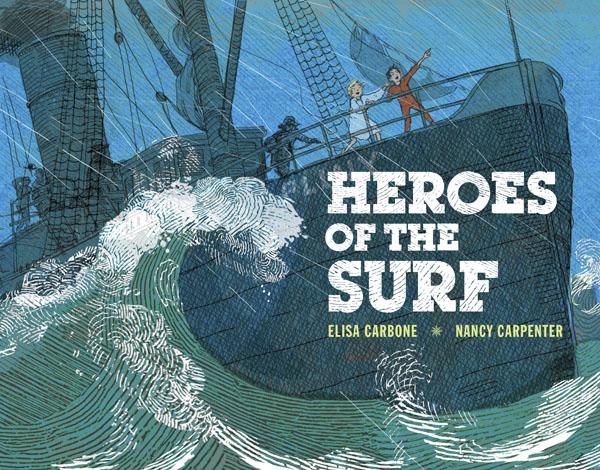
Summary: Two boys playing “pirate” on a steamship off the coast of New Jersey in 1882 find themselves in real danger when their ship runs aground. Hope is almost lost when waves are too high to lower the life boats. Someone spots something on the horizon. Is it pirates? No, there are rescuers in the surf! Local people have prepared for ships running aground and are on their way to help!
What I liked about it: Introduces the history of the Coast Guard through a fictionalized story, but based on a actual event. Illustrator Nancy Carpenter’s drawings vividly capture life on a steamship and the movement of the waves.
Who I would recommend it to: Grade 2-4. This would be a great classroom read-aloud.
Claude Debussy: (First discovery – music)
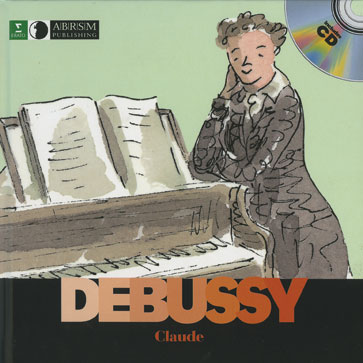
Summary: In an attractive “picture book” format, author Pierre Babin tells the story of musician Claude Debussy. Claude was born in 1862 near Paris. His early life wasn’t easy. His parents owned a shop, but were not very good at business and they moved a lot. Then Claude’s father is sent to prison for taking part in the revolution. His mother sends him to live with his Godmother in Cannes. Claude sees the ocean for the first time and wants to become a sailor. But something else also interests him at his Godmother’s house – a piano. Claude is captivated by sound. His Godmother decides to give him piano lessons. When Claude returns to Paris he continues lessons with Madame Maute, who learned from the great Chopin. By age 10 he has won a place at the Paris Conservatoire. As a piano student, Claude is rebellious and fights with his teachers. In spite of this, he goes on to win prizes and to compose many great compositions, including the beautiful “Claire de Lune.”
What I like about it: This is an excellent addition to the “First Discovery –Music series”, that includes biographies of Mozart, Chopin, Beethoven and others. The information is beautifully presented interspersed with vintage photos and illustrations by Charlotte Voake (Ginger). The volume includes a CD with examples of Debussy’s compositions interspersed with narration by Michael Cantwell.
Who I would recommend it to: Music teachers, student musicians age seven and up. Highly Recommended.
Bridges and Tunnels: Investigate Feats of engineering with 25 projects (Build it yourself series)
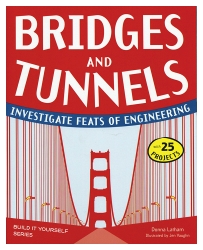 Summary: Bridges and Tunnels: Investigate feats of Engineering with 25 projects by Donna Latham, is the latest edition of the excellent (Build it yourself series), which includes such titles as Backyard Biology: Investigate habitats outside your door with 25 projects and Robotics: discover the science and technology of the future with 20 projects by Kathy Ceceri. “Bridges and Tunnels” explains in simple terms the social, scientific, natural and artistic forces behind the creation of bridges and tunnels. Words that may be unfamiliar to young readers are highlighted and defined in boxes on the page they are discussed. Several chapters cover the science (physics) of building bridges and tunnels and several cover well-known bridge and tunnel disasters and why they happened. Each chapter offers clear instructions for experiments to demonstrate principles discussed in the chapter and instructions for a “build it yourself” project. The volume is completed with a glossary, index and list of resources. The author, Donna Latham has great credentials. She is an award-winning author and playwright and the author of Amazing Biome Projects You Can Build Yourself, Deciduous Forests, Deserts, Garbage, Norah Jones, Oceans, Respiration and Photosynthesis, and Tundra. She is also a librarian at the Schulz Graphic Novel Library, a muralist at Dartmouth College, and a staff writer for the comics journalism website The Beat (www.comicsbeat.com).
What I like about it: Purchase this for the simple, explanatory writing style and the many project ideas it offers your students. It was written for 4th through 6th grade students, but would work well in a middle school library. As a basic text for understanding the physics and engineering behind building structures, this is an excellent introduction. I loved the “build it yourself “ activities which extend the science in the book. Students can enjoy building “Newton’s Rocket mobile,” or a “Craft stick beam bridge.”
Who I recommend it for: Public libraries, school libraries, students in upper elementary and lower middle school, science teachers, science clubs for youth, boy scouts and girl scouts. Excellent!
The Adventures of Sir Balin the Ill-Fated
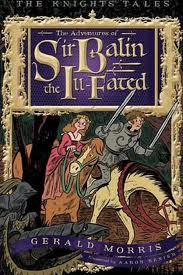
Summary: The night Balin is born in Norththumberland, the old woman of the mountain arrives and predicts greatness for the newborn! “But wait,” the old woman exclaims! “There’s a cloud over this!” “His greatness will bring calamity to all his companions and he will strike the dolorous stroke!” Thus begins the life and knighthood of Sir Balin, the ill-fated, alternately trying to avoid and fulfill his fate.
What I like about it: This is another installment in “The Knights’ Tales,” a fun series for reluctant readers. Readers will enjoy the twists and turns in the story, the wordplay, and humor, matched with clever illustrations by Aaron Renier. Gerald Morris is clever writer, who will win many fans with this series.
Who I would recommend it to: Hook reluctant readers to this series in grades 3 to 5. Recommended for school and public libraries!
Bushman lives!
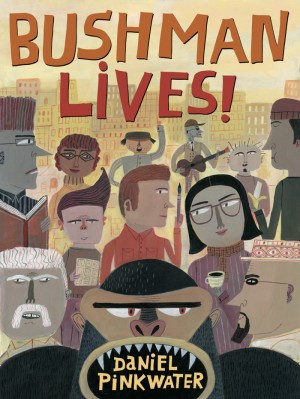 Summary: This is the story of Harold Knishke, a Chicago teenager growing up in the 60s. He loves “Bushman,” the famed recently departed gorilla of the Lincoln Park Zoo. “Bushman lives” is a common greeting among his friends! After his flute teacher convinces Harold that he has no musical talent, he sells his flute for art supplies and embarks on a journey into the strange “beatnik” world of Chicago art.
What I like about it: I usually enjoy Pinkwater’s YA novels filled with the quirkiest of characters, literary illusions and philosophical discussions. I loved that 1960s Chicago is his own personal wonderland filled with the oddest of characters, from the artist who only paints one color, calling this style “mimimonoism,” to the wise woman and somewhat bossy lady named Molly and her “non” dog “Wolluf.” This time, the sheer volume of quirky characters and odd plot diversions crashed the whole story.
Who I would recommend it to: I would only recommend this to a true fan of Pinkwater’s books. Instead, I would recommend one of his older YA novels: The Neddiad : how Neddie took the train, went to Hollywood, and saved civilization, 2007.
Bug Off! Creepy, Crawly Poems
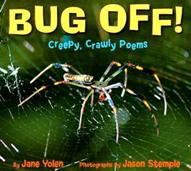
A collection of 13 poems about bugs. “Tiny living beings [with] a beauty and mystery all their own” is Yolen’s apt description of the insects featured in this
book. Jason Stemple uses macro photography to capture fascinating and interesting detail. From the facets on a fly’s eye, to the divisions of a dragonfly’s wing, the details are intriguing. Each insect is highlighted on a two page spread – one side for the full color photograph, the other side for a witty poem from Jane Yolen accompanied by a non-fiction paragraph that gives the scientific order of each insect and an interesting factoid. For example: Did you know that ants are found everywhere in the world except Antarctica and that not all ladybugs have spots?
“An Army of Ants” has a nice cadence to it, “POP Goes the Tick ” has the gross factor and “The No-Spot Ladybug in Court” is a trial case that is fun to read.
Poem Runs: Baseball Poems and Paintings
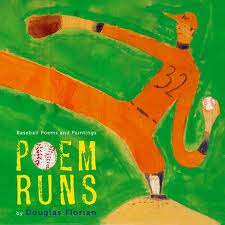
The opening poem on the inside front flap – Let’s Play Ball! begins the inspired collection of poems all about baseball. Florian takes the reader from opening season warm ups to end of season reminiscing. There is a poem for every player position – pitcher, catcher, first, second and third baseman, short stop, right fielder, umpire and base stealer among others. He even includes a poem about the fans (on the back cover) and one about the baseball itself. Baseball lovers will envision that the poems were written about them. After all, what pitcher wouldn’t want to be known as the “scourge of all hitters / the starter of slumps” and how many hitters would be happy to consider themselves as “strong…mean..with eyesight quite keen”? This book would be great to use as an example for students to model their own themed book of poetry.
Florian creates the artwork in “gouache watercolors, oil pastels, colored pencils, and pine tar on primed paper bags”. This mixed media combination gives a wonderful organic feel and texture to the illustrations. My favorite is the illustration for “A Baseball”. Here Florian depicts a baseball unraveling at the seams. The red lacing forms words to help explain why it’s falling apart. The words “hit, smash, crash, pound and drive” say it all.
Florian has hit a home run with this delightful book!